The Ultimate Guide to Baby Rompers: Styles, Sizing & When to Use Them
June 19 2025 – Lottie & Lysh


A guide from the people who make them
What actually is a baby romper? Is it a sleepsuit? A babygrow? Something you wear over a vest? And when do babies wear them?
It's a fair question, because the same words can mean different things depending on where you live, where you shop and who you're talking to. I'm Lottie, a mum and the founder of Lottie & Lysh. We make children's clothing by hand in Cornwall, and our romper patterns range from popper-front newborn outfits to pull-on styles, dungaree-style overalls and shorties for warmer days.
So rather than pretend there's one official definition, I'll show you the actual styles we make, how they work and which ones I'd choose for different stages of babyhood.
What is a baby romper?
A baby romper is an all-in-one outfit that combines a top and bottom in one garment. It might have long legs, short legs, sleeves, straps or no sleeves at all. Some fasten with poppers; others simply slip on. The word overlaps with babygrow and sleepsuit, especially across different countries. At Lottie & Lysh, we usually call a footed, mittened one-piece designed for sleep a sleepsuit, while romper covers a wider family of one-piece outfits. Some rompers are suitable for sleeping in too.
Romper, sleepsuit or babygrow: what's the difference?
You'll hear all three terms used for similar things. In the UK, babygrow and sleepsuit often describe an all-in-one with covered feet. In other places, romper might mean a short summer playsuit. Neither use is necessarily wrong.
Here's how we describe the clothes we actually make:
| Style | What it means at Lottie & Lysh | Best for |
|---|---|---|
| Romper | An all-in-one outfit, from long-legged popper styles to pull-ons, gathered styles and shorties. | Everyday wear, playing, outings and sometimes sleep. |
| Sleepsuit / babygrow | Our sleep-oriented all-in-one, with integrated feet and mitts in relevant sizes. | Newborn days, naps and bedtime, when appropriately fitted. |
| Overalls / dungarees | A strappy one-piece, generally worn with a top underneath. | Layered daytime outfits. |
| Shortie | A romper with short sleeves and legs. | Warmer weather and easy summer dressing. |
There's no need to get hung up on the name. Look at the shape, fastenings and fabric, and think about when you'll use it.
The different types of baby romper, explained
This is where it gets interesting. One little word covers quite a few very different outfits.
1. Popper-front, long-legged rompers
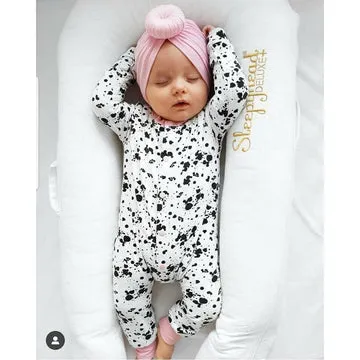
Our Monosplatter romper is a good example: long sleeves, long legs, no feet, and poppers down the front. It can be an everyday outfit, but a soft, appropriately fitted popper-front romper can also work as sleepwear. The opening makes it straightforward to dress a tiny baby and get to the nappy.
2. Zipless, popperless slip-on rompers
These are the ones people sometimes look at and wonder how on earth they're supposed to get a baby into them. Then they try one.
Our Lion Noir zipless romper has no zips or poppers. You slip it on through the stretchy neckline and pull it into place. Once parents get their heads around the dressing technique, it very often becomes their favourite for quick, fuss-free changes. There's nothing to line up or fasten, and the roomy harem-style fit is comfortable for wriggling.
It's a particularly handy style for older babies and toddlers, although the right choice for a newborn depends on the individual fit and how comfortable you feel dressing them.
3. Gathered rompers
Our gathered rompers are another slip-on option with no zips or poppers. They have a different silhouette from the harem-style pull-ons, so they're lovely when you want an outfit that feels a bit more dressed up without introducing fiddly fastenings.
4. Sleepsuits and babygrows
Our Mama's Boy babygrow shows the sleep-oriented side of the range: front poppers, integrated feet and mitts in relevant sizes. Parents often use romper, babygrow and sleepsuit interchangeably, and that's fine. We use sleepsuit to help you know what kind of design to expect.
5. Overalls and dungaree-style rompers
Our Tattoo Overalls are a one-piece outfit with straps, rather than a traditional sleeved romper. They have two popper positions on the straps, giving you two length settings as your child grows. Wear them over a vest or T-shirt depending on the weather.
6. Shortie rompers
Think short sleeves, short legs and a relaxed fit. Our Sand Leopard Shortie has front poppers and makes a brilliant all-in-one summer outfit. Less fabric around the legs, but still all the convenience of one piece.
See the different styles
Rather than six near-identical product photographs, these show the actual differences in shape and fastening. All are Lottie & Lysh designs made in our Cornish studio.
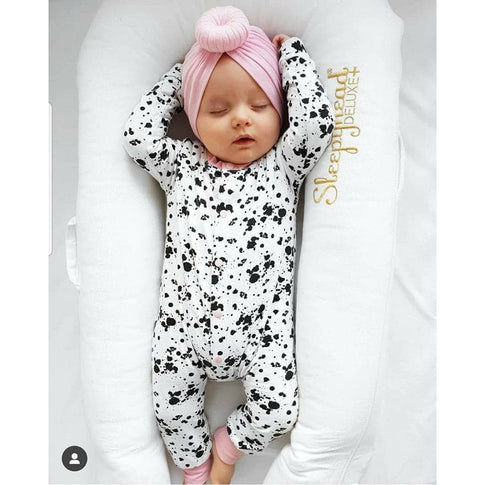 Popper-front romper Monosplatter Baby Pink Long sleeves, long legs, footless and front-opening poppers. |
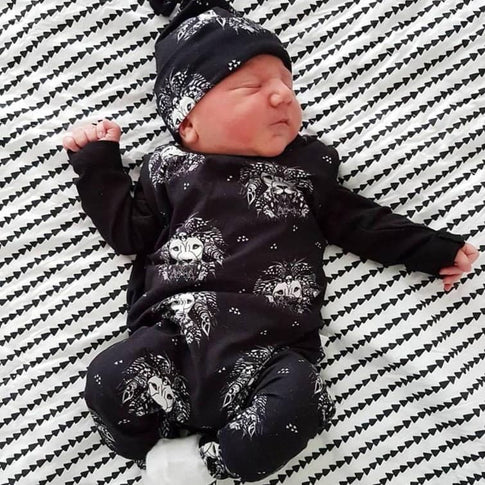 Zipless slip-on romper Lion Noir No zips or poppers. A simple pull-on design that many parents end up loving. |
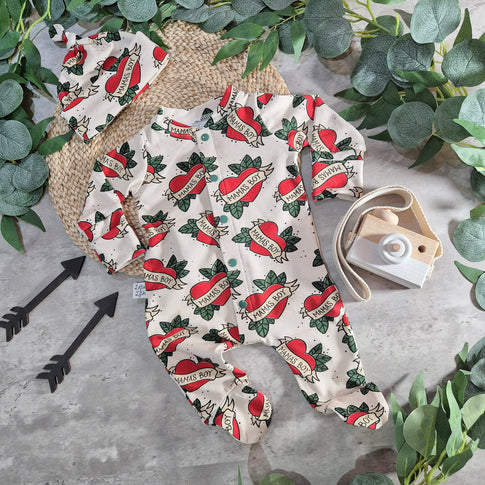 Babygrow / sleepsuit Mama’s Boy Popper-front, with integrated feet and mitts for smaller babies. |
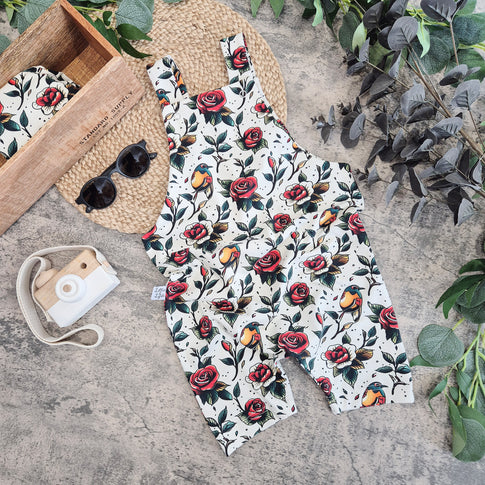 Dungaree-style overalls Tattoo Overalls Two popper positions on the straps offer two length settings. |
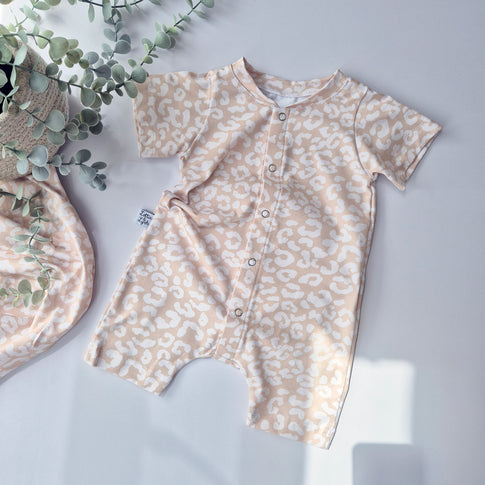 Shortie romper Sand Leopard Short sleeves and legs, loose-fitting with front poppers. |
When should babies wear rompers?
From birth, if the size and design are appropriate. A soft, properly fitting front-opening romper can be useful for a newborn. As babies start rolling, wriggling and crawling, comfortable all-in-ones keep their outfit together rather than leaving a top riding up their back. Later, slip-on rompers, gathered styles and overalls become lovely practical choices for toddlers too.
There's no special age when babies are supposed to stop wearing rompers. We make them well beyond the newborn stage because children don't suddenly stop needing comfortable clothes when they learn to walk.
How do you wear a romper on a newborn?
For a newborn, I'd usually choose a style that opens at the front or has an easy, flexible neckline. Lay the garment out, support your baby's head and body, gently guide their arms and legs into place, then close the fastenings without pulling the fabric tight around the nappy.
For a zipless pull-on, follow the garment's dressing method and work gently rather than forcing a small opening over your baby's head. If you're not comfortable with a particular style in the early weeks, there's no prize for persevering. Choose the popper-front one instead.
A romper can be worn on its own in suitable temperatures or with a vest underneath when an extra layer is needed. For dungaree-style overalls, add a soft top underneath. Always dress for the actual temperature and your baby's comfort, rather than a fixed number of layers.
What do babies wear with rompers?
- Popper-front long rompers: a vest underneath if needed, plus socks for footless styles in cooler weather.
- Zipless or gathered rompers: on their own or layered over a vest or T-shirt, depending on the cut and temperature.
- Dungaree-style overalls: a bodysuit or top underneath.
- Shortie rompers: often a complete warm-weather outfit, with suitable sun protection outdoors.
- Sleepsuits: choose any underneath layers according to room temperature and safer-sleep guidance.
For sleep, use properly fitting sleepwear and follow The Lullaby Trust's safer-sleep advice. Not every fashion romper is intended as sleepwear, and loose or decorative details may make a style unsuitable for sleeping.
What makes a good baby romper? The things we look at when making one
When you're the person sewing the outfit, you start noticing details that are easy to miss in a product photo. A nice print matters, of course, but so does the way a seam sits under a baby's arm, whether the nappy has enough room and how a cuff behaves after washing.
- Soft, flexible fabric. Our everyday jersey is typically 95% cotton and 5% elastane, so it moves with the child and recovers its shape.
- Comfortable construction. We pay attention to seams, enclosed waistbands where relevant and the places fabric rests against the skin.
- Enough nappy room. A romper shouldn't pull tightly across the crotch when a baby sits or stretches.
- Fastenings that suit the style. Poppers for access, or a thoughtfully cut neckline for slip-on designs.
- Room to grow. Reversible cuffs and adjustable strap positions can extend the useful fit on designs that include them.
- Care that works for real families. Clothing that can be worn, washed and worn again, not saved for one photograph.
We use OEKO-TEX certified fabrics, but it's worth knowing what that means: testing against specified harmful substances, not a promise that no baby will ever react to a fabric. If your child has particularly sensitive skin, check individual fabric details and follow their care advice.
Can a baby sleep in a romper?
Sometimes, yes. A soft, appropriately fitted popper-front romper can work for sleep, just as a babygrow can. The important distinction isn't simply what the garment is called. It's whether that particular style is suitable for sleep, fits properly, has no unsafe loose or decorative features, and is appropriate for the room temperature.
Our sleepsuits are specifically designed with sleeping in mind, including integrated feet and mitts in relevant sizes. A loose dungaree-style outfit with straps is a different proposition and isn't what I'd choose as nightwear.
How many baby rompers do you need?
There isn't one magic number, partly because some parents use rompers as their main everyday outfit while others mainly use sleepsuits. If rompers are your go-to, a handful of favourites to rotate between washes is a sensible starting point. You may need more if your baby has frequent leaks or reflux, or fewer if you wash often.
I wouldn't buy ten of one style before trying it. Start with a popper-front option, perhaps a slip-on once you're ready, and see what you actually reach for. That's usually more useful than buying an entire drawer based on what looks cute online.
And if you're still preparing for a new arrival, our newborn clothing size guide can help you choose sizes before the birth.
The lovely thing about handmade? We can change the pattern
Want a long-legged popper romper with no sleeves? We can do that.
Short dungarees? Frill shoulders? A different sleeve or leg length? Those are exactly the sorts of requests we can discuss because we make the clothes ourselves, one piece at a time.
Not every combination is possible with every fabric or pattern, but we're always happy to talk through what you're imagining. Send us a message and let's see what we can make.
Baby romper FAQs
What is a baby romper?
An all-in-one outfit combining the top and bottom. Rompers can be long or short, sleeved or sleeveless, and may fasten with poppers or slip on without fastenings.
Is a romper the same as a babygrow?
The words overlap. At Lottie & Lysh, babygrow or sleepsuit usually means a sleep-oriented all-in-one with integrated feet and mitts in relevant sizes, while romper covers a wider range of one-piece outfits.
When do babies wear rompers?
From birth onwards, provided the size and style fit appropriately. Babies wear them for everyday dressing, playing and outings, and certain designs can also be suitable for sleep.
What do babies wear under a romper?
Sometimes nothing extra, sometimes a vest or bodysuit, depending on the style and temperature. Dungaree-style overalls usually need a top underneath.
How do zipless rompers work?
They're pull-on all-in-ones with no poppers or zips. A flexible neckline lets you slip the garment on and pull it into place. Many parents find them surprisingly quick once they've tried the technique.
Are rompers good for babies learning to crawl?
A comfortable, well-fitting romper can be a great choice because it moves with the baby and keeps the outfit together. Make sure the legs and crotch allow free movement without excessive loose fabric.
Can I customise a baby romper?
Yes. At Lottie & Lysh we can discuss different sleeve lengths, leg lengths, frills and other pattern adjustments, subject to the design and fabric. Just ask us.
A final word from Lottie
If there's one thing I've learnt from making baby clothes, it's that the best style is the one you actually enjoy dressing your child in. Some parents love poppers. Others discover zipless rompers and never look back. Some want every outfit to have a big, bold print, and others prefer something simple.
There's room for all of it. Childhood should look like childhood, and clothes should let little people get on with being little.
You might also like: How to choose baby clothes · Newborn sizing explained · Newborn baby clothes














0 comments