

Why Footless Sleepsuits Are a Parent Favourite
June 30 2025 – Lottie & Lysh


I love a traditional babygrow with little enclosed feet. They're one of those things that make a newborn look impossibly tiny. But after having my own babies, I became a bit of a convert to footless sleepsuits. Not because they're fashionable. Because they solved a problem I seemed to encounter every other night.
I'd go to get one of my boys out of his cot and discover that he'd managed to pull his legs right up inside his sleepsuit. Somehow a foot would end up poking through a gap in the poppers, halfway up his chest. How? I still couldn't tell you. Babies are remarkably talented at getting into positions that shouldn't be physically possible.
Mine slept better in footless styles. Without a fixed foot section for their legs to get tangled up in, they seemed more comfortable, and I wasn't forever sorting out where their feet had disappeared to.
I'm Lottie, the mum behind Lottie & Lysh. We make children's clothing by hand in Cornwall, so I've looked at sleepsuits from both sides: as a parent getting a wriggly baby dressed, and as the person cutting and sewing the clothes. Here's what I've learnt about footless sleepsuits, when they're useful, and what actually matters when you're choosing one.
What is a footless sleepsuit?
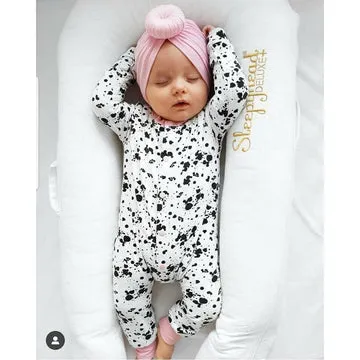
A footless sleepsuit is a one-piece baby outfit with open ankles rather than fabric enclosing the feet. It may have poppers or a zip, and the legs can finish with a simple hem or a cuff. You might also hear it called a footless babygrow, footless baby grow or long-leg romper. The names overlap, particularly between countries and clothing brands.
Why I preferred footless sleepsuits for my own babies
That disappearing-legs situation was the biggest reason. With enclosed feet, there is a fixed point at the end of each leg. If the sleepsuit is getting a little short, or your baby draws their knees right up, the legs of the outfit can bunch and shift. In our house that sometimes ended with a leg escaping into the body of the babygrow.
Footless designs gave my boys a bit more freedom to pull their legs up and stretch them out. I found they settled more comfortably, and I spent less time straightening out their clothes.
That's my experience, rather than a promise that a particular outfit will make every baby sleep better. Babies are all different. But it's one of those very ordinary parenting details that has stayed with me, and it influences how I think about clothing design now.

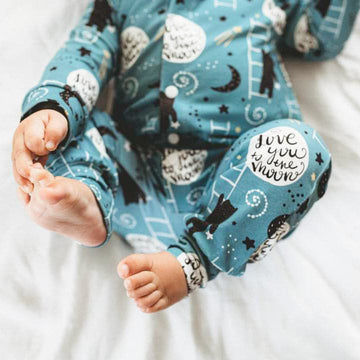
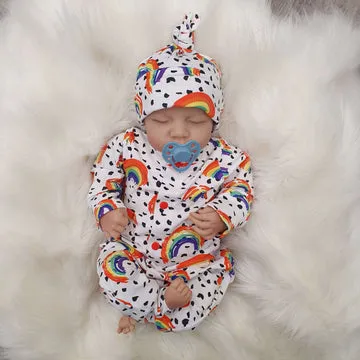
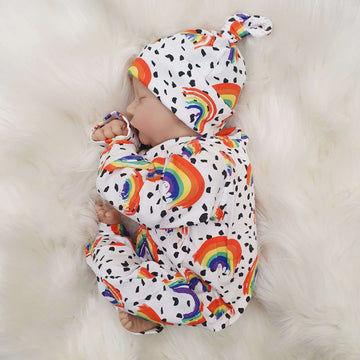
One of our footless styles, made for little legs that don't stay still.
Are footless sleepsuits better for babies learning to stand and walk?
For me, this is another big advantage. When babies begin pulling themselves up, cruising along the furniture and taking those first wobbly steps, I prefer their feet to be free.
With a footless sleepsuit, you can leave them barefoot indoors where it's safe and warm enough, so their feet have direct contact with the floor. Or you can add suitable non-slip socks when needed. You're not relying on whatever grip the fabric feet of a sleepsuit happen to provide.
It doesn't mean a footed sleepsuit will stop a child learning to walk. It simply gives you more choice about what goes on their feet, and I found that especially practical once mine were constantly up and down, trying to stand on absolutely everything.
For early walkers, always consider the surface and avoid slippery socks or footwear. Footless clothing doesn't replace a safe environment or supervision.
Do footless sleepsuits last longer than footed ones?
They often can, but the design and fit still matter. One of the first places a footed babygrow can start feeling too small is the feet. The body might have a little room left, but those toes have reached the end of the fabric.
Without enclosed feet, you've removed that particular restriction. If the legs become a little shorter as your baby grows, the outfit can still be comfortable for a while, provided the body, shoulders, nappy area and overall fit remain right.
When we're making clothes at Lottie & Lysh, I think about growing room quite a lot. It's one reason we use soft stretch jersey in many of our designs and incorporate practical cuffs where the pattern allows. A garment should move with a baby, not work against them.
But growing room isn't a reason to buy something excessively oversized for sleep. Always follow appropriate baby sleep clothing and fit guidance.
Footless versus footed sleepsuits: which should you choose?
| What matters | Footless sleepsuit | Footed sleepsuit |
|---|---|---|
| Feet | Open, so you can choose bare feet or suitable socks | Covered without needing socks |
| Growing room | No enclosed foot section to become too short | Foot length can become restrictive first |
| Standing and walking | Easy to leave feet bare for grip on suitable floors | Check the fabric feet and grip |
| Cooler weather | Add appropriate layers as needed | Feet are covered as part of the outfit |
I don't think there's one winner for every family. Footed babygrows are wonderfully convenient for tiny newborns, especially when you want their feet covered without hunting for socks. I just found that footless ones became more useful as my babies grew and moved more.
What I look for when making a good footless sleepsuit
Being a maker changes how you look at clothes. I notice where the seam sits, whether the fabric has enough give when a baby curls up, and whether the fastening is going to make a 2 am nappy change harder than it needs to be.
Softness and stretch
Our everyday jersey is typically 95% cotton and 5% elastane. The cotton gives a soft base, while the elastane helps the fabric stretch and recover. I want enough flexibility for bent knees and wriggly arms, without a garment becoming baggy and losing its shape after a few wears.
Seams and fastenings
I look for comfortable seam placement, a sensible amount of room for a nappy and openings that make dressing straightforward. Some parents prefer poppers; others love zips. Neither is universally better, and the fastening needs to be properly finished so it doesn't rub.
Cuffs that do their job
The ankle needs to sit comfortably. A cuff shouldn't dig in, but it shouldn't constantly ride halfway up the leg either. We use reversible or adjustable cuffs on relevant designs to help extend their useful fit as children grow.
Fabric sourcing
We choose OEKO-TEX certified fabrics and use OEKO-TEX inks in our production. That certification means the relevant materials have been tested against specified harmful substances. It doesn't mean no child could ever react to a fabric, so I wouldn't make that promise, particularly to parents dealing with sensitive skin.
It's those details, rather than the word “premium” on a product page, that tell me whether someone has really thought about how a baby will wear the clothes.

Can a baby sleep in a footless sleepsuit?
Yes, a footless sleepsuit can be part of a baby's sleep clothing. Whether it's suitable on a particular night depends on the room temperature, the fabric and layers, and your baby's individual needs. Footless doesn't automatically mean cooler, safer or better for sleep than footed.
Follow NHS and Lullaby Trust safer-sleep advice: avoid overheating, use an appropriately fitted outfit and keep the sleep space clear. Check your baby's chest or the back of their neck rather than judging temperature from their hands or feet alone. If you're unsure about layering, ask your midwife or health visitor.
I loved footless sleepsuits because of how they worked for my own babies. That's different from saying they prevent sleep problems or guarantee better sleep, and I think that distinction matters.
When should babies start wearing footless sleepsuits?
There's no magic age. Some parents use them from newborn; others switch when the footed styles start feeling short or their baby becomes more active. For me, the appeal grew as the boys started pulling their knees up, rolling around and then finding their feet.
They're also useful for daytime wear. A long-leg, footless romper can be an easy all-in-one outfit for play, crawling and days out. At Lottie & Lysh, we use “romper” for a broad family of all-in-one styles, including some that are suitable for sleep. The naming varies between brands and countries, so the design and product details matter more than the label.
If you're trying to work out which style suits your family, our guide to different baby rompers explains the options, from popper-front styles to zipless designs and dungaree-style overalls.
And yes, they can still be colourful
Practical doesn't have to mean plain. That's rather the point of Lottie & Lysh. We make colourful, individual children's clothes by hand because I don't think comfort and personality should be competing priorities.
You'll find everything from florals to bold animal prints in our collections. And because we make our clothes ourselves, we can often adapt a style to suit what you want. If you've seen a print you love but would prefer a different sleeve or leg length, it's always worth asking.

Footless sleepsuit FAQs
Are footless sleepsuits better than footed sleepsuits?
Not automatically. Footless styles give more flexibility around the feet and may offer more growing room, while footed sleepsuits keep feet covered without separate socks. I preferred footless for my babies, but the right choice depends on fit, temperature and what works for your family.
Why do babies pull their legs inside babygrows?
Babies naturally curl their knees up and wriggle. If a footed babygrow is getting short or shifts around, their legs can sometimes slip out of the leg sections into the body of the garment. I experienced this with my own children, and it's one reason I liked footless designs.
Are footless sleepsuits good for babies learning to walk?
They can be practical because you can leave feet bare on suitable indoor floors or choose non-slip socks. This avoids relying on the grip of enclosed fabric feet, although a footless sleepsuit itself doesn't teach a baby to walk.
Can newborns wear footless sleepsuits?
Yes. Footless styles are available for newborns as well as older babies. Choose an appropriate fit and suitable layers for the room temperature, following safer-sleep guidance.
Do footless babygrows last longer?
They may fit for longer because there is no enclosed foot section to become too short. The rest of the garment still needs to fit properly, particularly around the body, shoulders and nappy.
What's the difference between a footless sleepsuit and a romper?
The terms often overlap. At Lottie & Lysh, a romper is a broad term for an all-in-one outfit, while a sleepsuit generally refers to a style intended for sleep. A footless, popper-front romper can also be suitable as sleepwear, depending on its design.
A note from Lottie
I don't think there's a perfect baby outfit that works for every child. But I do think the little things you discover when you're actually dressing babies are worth listening to. The leg that somehow escapes through a popper gap. The cuff that keeps riding up. The outfit you wash and put straight back on because it just works.
Those are the details I think about when we're making clothes here in Cornwall. And it's why footless styles will always have a place in our range.
Explore our footless sleepsuits →
You might also like: Our guide to baby rompers | Newborn baby clothes sizing.














0 comments